Kangel's Visual Reading
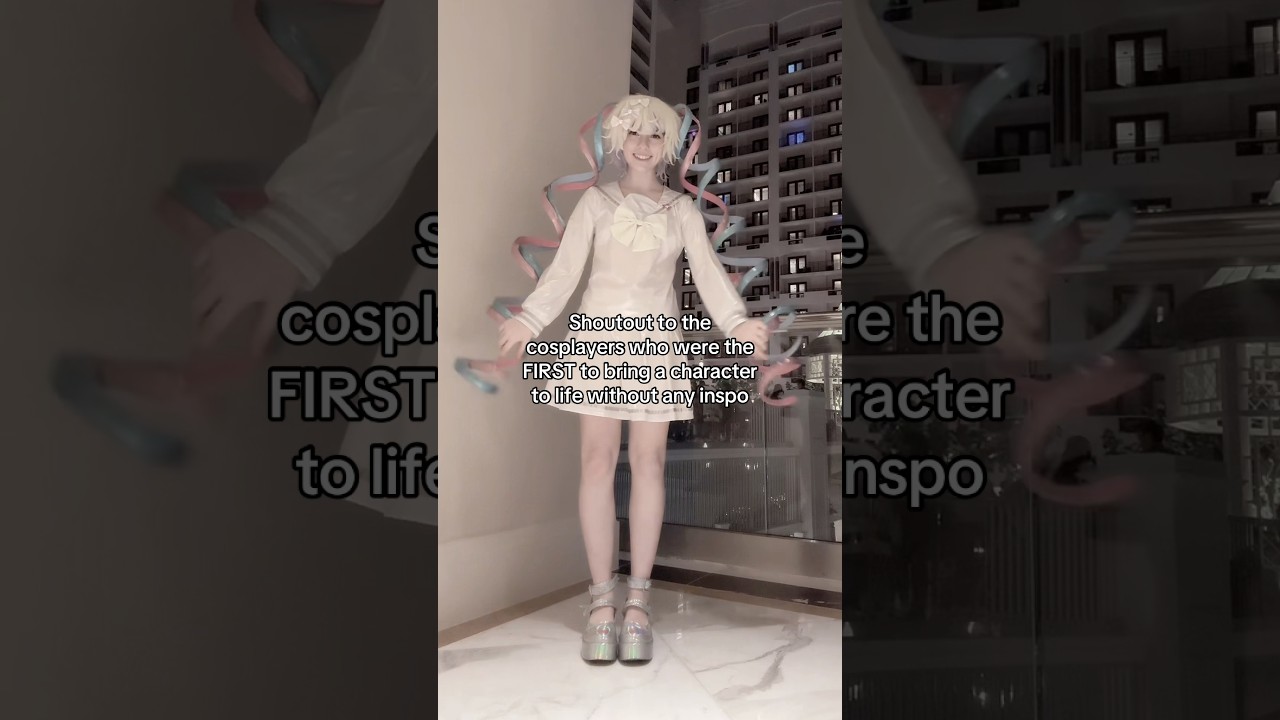
Kangel, the digital alter ego of Ame-chan in the game Needy Girl Overdose (also known as Needy Streamer Overload), presents an aesthetic that blends the peak of Japanese internet culture with distorted angelic elements. Visually, she is a study in contrasts: the base of the look is an oversized pink hoodie with white stripes, something comfortable and mundane, which transforms into something magical with the addition of translucent wings and a halo formed by LED wires integrated directly into the character's vast pastel pink hair.
The silhouette is both voluminous and angular. The hoodie creates a large, rectangular shape, while the acrylic wings add geometric lines extending from the back, resembling stylized angel wings. The wig, excessively long and dense, in an almost albino pastel pink tone, is the focal point — and it is here that the greatest technical challenge of the Kangel Cosplay lies: embedding LED wires without the weight damaging the structure or the synthetic fibers melting from the heat of the electronic components.

The color palette is extremely restricted, which facilitates execution: dominant pastel pink, pure white on the hoodie details, transparency in the wings, and cool white light in the LEDs. Any deviation from this palette compromises the immediate recognition of the character — a critical point when considering that a Needy Girl Overdose cosplay relies on these striking visual elements to be identified at events and in photos.
Construction Priorities
When evaluating which elements "sell" the character from a distance, the hierarchy is clear. The wig is the number one item: without the correct volume and length, accompanied by the glow of the LEDs that simulate the digital halo, the cosplay loses its main identity. It is the element that transforms a girl in a pink hoodie into the virtual diva OMGkawaiiAngel.
In second place comes the kawaii hoodie. It establishes the base silhouette and the "internet girl who never leaves her room" vibe. The characteristic white stripes on the sleeves and the oversized cut are essential — a plain pink hoodie does not work as a reference. In third place, the acrylic wings complete the transformation, adding the fantasy element that elevates the cosplay from "casual cosplay" to something that grabs attention at any event.
The makeup, although important (marked dark circles, pale lips, expression of chronic exhaustion disguised with kawaii aesthetics), is a complement that can be simplified if time is short. The three physical elements — LED wig, hoodie, and wings — are inseparable from the character's visual identity.
Technical Safety of Electronics
When integrating LEDs into clothing and wigs, safety is the priority. Use only low-voltage LEDs (AA batteries or 5V USB batteries) that do not generate excessive heat. Avoid direct contact between light sources and synthetic fibers. The assembly should always provide a cable path that does not limit the movement of the cosplayer's neck or arms.
2. Customizing the Kawaii Hoodie: cable and battery management
Turn the hoodie inside out to install the power management system. In the front (kangaroo) pocket, sew an internal divider or a secret fabric pocket (10 cm x 8 cm) on the inner side. This location will house the LED battery box, allowing quick access to turn the system on or off without needing to remove the wig or take off the hoodie.
For the wire routing, make a small reinforced opening (buttonhole) in the inner shoulder or collar seam, allowing the LED cable to rise discreetly inside the fabric until it reaches the base of the wig at the nape of the neck. This prevents the wires from being exposed and snagging on objects during use.
Required Materials
Mandatory Materials List
- Long pastel pink wig (80–100 cm, heat-resistant synthetic fiber up to 180°C)
- Oversized pink hoodie with white stripes on the sleeves (XL or XXL size to create the correct volume)
- Transparent acrylic sheet (2 to 3 mm thick, approximately 60 cm x 40 cm)
- Cool white LED wire kit (Fairy Lights) with battery box (minimum 2 meters of wire, 3 meters ideal)
- Hot glue (7 mm sticks, transparent)
- Precision craft knife with replacement blades
- Aluminum wire (2 mm thick, for wing structure)
- White bias tape (for hoodie details)
- Adhesive Velcro (for removable attachment of wings and battery box)
- Needle and thread (pink and white)
- AA batteries (for the LED kit)
Optional Materials
- Iridescent adhesive vinyl (to apply to the wings and create a holographic effect)
- Extra pastel pink wig wefts (to increase volume)
- Matte white spray paint (for finishing acrylic edges)
- Portable USB battery (as an alternative to batteries, if the LED kit supports it)
- Silicone heat shield (to insulate LEDs from hot glue)
Common Mistakes and Solutions
Mistake 1: Gluing LEDs directly onto wig fibers with hot glue
This is a classic trap for those trying to learn how to make a lighted wig for the first time. Hot glue melts the synthetic fibers of the wig, creating visible and irreversible clumps. Worse still: the residual heat from the LEDs, even if low, can soften the glue over hours of use, causing the wires to come loose.
Solution: Create an internal structure using an extra hairnet or satin ribbon sewn into the inside of the wig. Fix the LEDs to this structure, not the fibers. Use hot glue only at the contact points with the hairnet/structure, keeping the LED wires housed between the layers.
Mistake 2: Not leaving a margin for error when cutting the acrylic
Acrylic is unforgiving: once cut, there is no way to add material back. Many cosplayers cut the wings exactly to the template size and then realize they needed an extra 1 cm to sand and polish the edges.
Solution: Always transfer the template to the acrylic with a 5 to 10 mm margin on all sides. Sand and polish the edges before testing the final fit. It is easier to cut again than to start from scratch.
Error 3: Positioning the battery pack in an inaccessible location
Fixing the battery pack to the back of the hoodie, for example, makes it impossible to turn the LEDs on or off without someone's help. At events, this means asking for favors all day or walking around with the lights off.
Solution: Sew an internal pocket inside the hoodie's front pocket or at the bottom hem (inner side). The box must be accessible through the pocket flap, allowing you to turn it on/off discreetly.
Error 4: Underestimating the glue drying time on the wings
Assembling the acrylic wings in a rush results in weak joints that fall apart during transport or in the middle of the event.
Solution: Glue all joints in separate sessions, with a minimum interval of 2 hours between each hot glue application. Leave the wings to dry supported in their final position for at least 12 hours before testing their strength.
Step by Step
1. Kawaii Hoodie Customization: base preparation
Start with a simple oversized pink hoodie (L or XL). If the hoodie already has white stripes on the sleeves, skip to the reinforcement step. If not, you will need to create the stripes using white bias tape or white fabric applied with a blind stitch.
Position the stripes on the sleeves at the forearm level, between the elbow and the wrist — this is the canonical position of the Kangel design. Use pins to secure the tape, try the hoodie on, and check in the mirror if the stripes are symmetrical. Sew by hand or machine with a zigzag stitch to allow for slight elasticity.
Checkpoint: Put on the hoodie and check in the mirror if the stripes are the first detail that catches the eye. They must be perfectly parallel to each other and aligned at the same height on both sleeves. Pull the sleeves gently — the stitching should not tear or deform.
2. Kawaii Hoodie Customization: internal pocket for electronics
Turn the hoodie inside out. In the front (kangaroo) pocket, sew an internal divider using a piece of pink or white fabric, creating a compartment of approximately 10 cm x 8 cm on the right side of the pocket. This compartment will house the LED battery pack.
Use reinforced running stitches on the sides and leave the top open (a flap that can be closed with a small piece of velcro). Make a hole of approximately 5 mm in the seam connecting the pocket to the back collar of the hoodie — this hole will allow the LED wires to go up from the back to the nape, where they will be connected to the wig.
Checkpoint: Place the battery pack in the compartment and pull the wires through the hole to the nape. Walk, raise your arms, and make sudden movements — the box should not jump out of the compartment and the wires should not snag on any point.
3. Acrylic Wing Assembly: cutting and finishing
Transfer the wing design to paper first. Kangel's wings are angular and geometric — think of elongated diamonds with sharp tips. Each wing should be between 40 and 50 cm long and 20 to 25 cm at its maximum width. Fix the paper to the acrylic sheet with double-sided tape.
Cut the acrylic using a precision knife: make several light passes along the cutting line, going deeper with each pass, instead of trying to cut it all at once. After 8 to 10 passes, the acrylic should be scored enough to break with a clean, firm pressure on the edges. Sand all edges with 400-grit wet sandpaper and then 800-grit, followed by polishing with a flannel cloth and acrylic polishing paste.
Checkpoint: Run your fingers along all cut edges — there should be no splinters or rough spots. The edges should be translucent and smooth to the touch. Hold the wing against the light — imperfections in the cut will be visible as distorted shadows.
4. Acrylic Wing Assembly: structure and attachment
Bend the aluminum wire to create the support structure for each wing. The wire should follow the inner contour of the wing, forming a central "spine" that extends beyond the base of the wing by approximately 15 cm — this extension will be bent to form the hook that attaches to the back of the hoodie.
Fix the wire to the acrylic using hot glue at strategic points: base, middle, and top tip. Apply the glue in small transverse "ribs" for maximum adhesion. If you are using iridescent vinyl, apply it now over the acrylic surface, cutting to size and smoothing it out with a credit card to remove bubbles.
For the attachment to the hoodie, sew two sturdy satin ribbon loops on the back of the hoodie, at shoulder blade height, positioned approximately 15 cm apart. The loops should form openings through which the wing wire hooks will be inserted. Reinforce with an X-stitch to support the weight.
Checkpoint: Attach the wings to the hoodie using the loops and sway your body from side to side. The wings should move with your body without tipping backward or sagging. The hoodie should not be pulled backward by the weight — if it is, consider using thinner acrylic (2 mm instead of 3 mm).
5. LED Wig Preparation: internal structure
Place the wig on a mannequin head or a Styrofoam ball covered in plastic wrap. Separate the fibers into sections, securing them with hair clips, to expose the inner cap. Sew a second layer of netting (or sturdy tulle) over the original cap, creating a space between the layers where the LED wires will be housed.
The distribution of the LEDs should follow a radial pattern starting from the crown of the wig, mimicking a halo. The point of concentration for the LEDs should be at the top of the head, with the wires running down the nape to the exit point (where they will connect to the wires coming from the hoodie). Secure the LED wires between the two layers of the cap using loose stitches — never glue them directly to the fibers.
Checkpoint: Turn on the LEDs and observe in a dark mirror. The glow should be visible through the wig fibers without the individual LED wires being apparent. The point of highest light concentration should be at the top of the head. Turn off the LEDs, wait 30 minutes, and touch the attachment points — they should not be hot.
6. Final Integration: wig, hoodie, and lighting
With the LEDs already fixed to the internal structure of the wig, guide the remaining wires down the nape, securing them with hair clips hidden under the fibers. The wires should exit at the base of the neck and connect to the wire kit running up the hoodie. Use simple connectors (or even tightly wrapped clear electrical tape) to join the two wire sections.
Put on the hoodie, attach the wings, put on the wig, and guide the remaining wires to the battery pack compartment. Connect everything, turn on the LEDs, and perform a full final test: walk, sit, raise your arms, crouch, and tilt your head in all directions. No wires should pull, no wings should fall, and no LEDs should flicker due to poor contact.
Checkpoint: After 30 minutes of continuous use with the LEDs on, check: (1) the wig is not sliding forward due to weight, (2) the wings remain in their original position, (3) the hoodie does not have an odd bulk in the pocket, (4) no components are hot to the touch. If everything passes, the cosplay is ready for the event.
Troubleshooting
LEDs flickering or turning off intermittently: The problem is almost always in the connections between the wire sections. Check each connection point and redo them with new electrical tape. If the problem persists, test the batteries — fairy lights drain energy quickly and cheap batteries may last less than 2 hours at maximum brightness.
Wings falling backward: The support wire may be too thin or the straps on the hoodie may be poorly positioned. Replace the wire with a thicker gauge (3 mm) or add a third central strap to the hoodie to better distribute the weight.
Wig looking like "doll hair" after fixing the LEDs: This indicates that the LED wires are visible through the fibers. The solution is to add more wefts in the problematic areas, sewing them over the area where the LEDs are concentrated. Extra wefts also help to disguise any irregular volume caused by the internal structure.
Hoodie tearing at the wing straps: Reinforce immediately with an internal patch of similar fabric and stitching around the entire perimeter of the patch. To prevent this in future projects, always use felt or thick fabric as a base for heavy prop support straps.
Estimated Budget
| Item | Price range | Source |
| --- | --- | --- |
| Moletom/Listrado Rosa Básico | $12.00 - $24.00 | Estimated FX |
| Peruca Longa Rosa Pastel | $16.00 - $32.00 | Estimated FX |
| Chapa de Acrílico Transparente | $9.00 - $18.00 | Estimated FX |
| Kit Fios de LED a Pilha (Fairy Lights Brancas) | $3.00 - $7.00 | Estimated FX |
| Materiais de Fixação (Cola quente, velcro, arame, agulhas) | $5.00 - $10.00 | Estimated FX |
Estimated conversion based on a reference FX rate; local retail prices may differ.