

The visual transformation of a cosplay reaches its peak when we reproduce the magnetic expressiveness of animation characters. Anime eyes, with their vibrant colors and stylized proportions, are the key to this transposition. The use of cosplay contact lenses requires a precise balance between aesthetic choice, based on technical criteria such as opacity and diameter, and the rigorous practice of ocular hygiene. This guide leads the cosplayer from the chromatic analysis of the character's gaze to safe handling, ensuring that your transformation is impactful while preserving the health of your eyes.
Visual Reading of the Character's Gaze
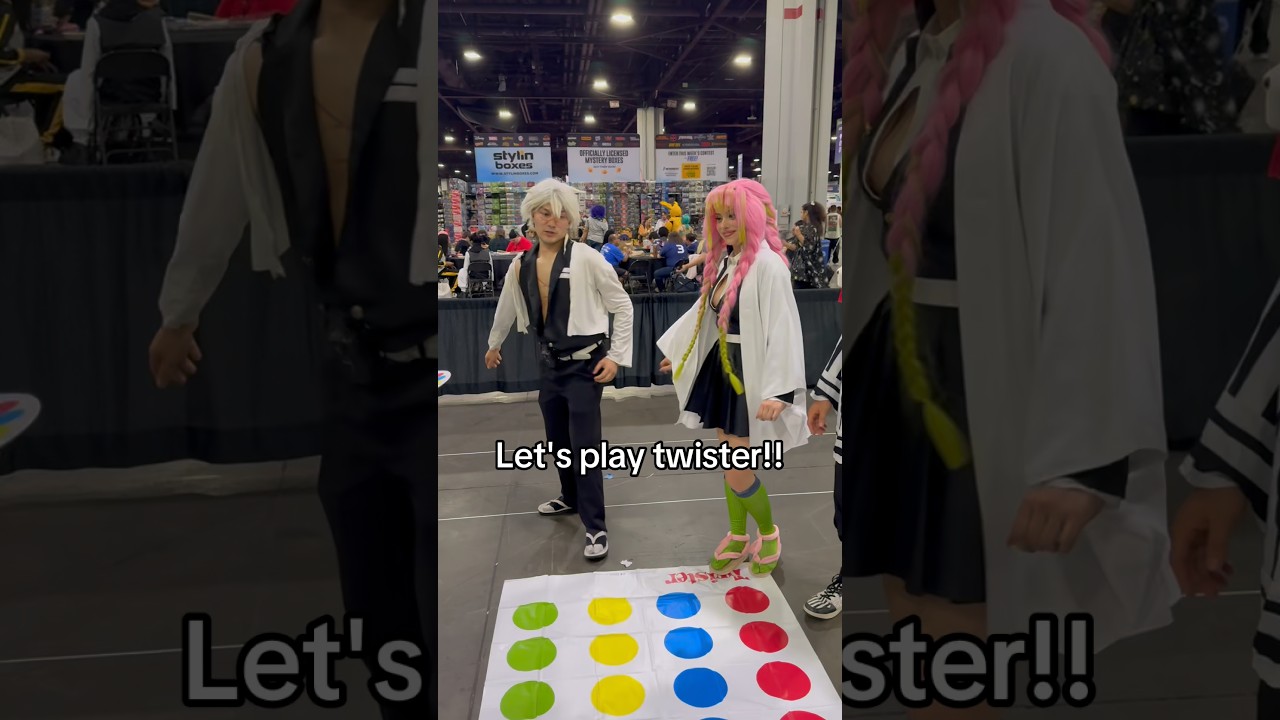
To choose the ideal anime colored lenses, the first step is to perform a detailed chromatic and structural analysis of the character's gaze. Unlike human eyes, which have smooth transitions of tones and fibrous textures in the iris, anime eyes are designed with solid color blocks, high-contrast gradients, and fixed highlights. Identifying whether the character has a feline gaze (like Maki from Jujutsu Kaisen), sweet and rounded eyes (like Mitsuri from Demon Slayer), or exotic pupils (like the Sharingan from Naruto) directly dictates the type of lens and the makeup contour you should adopt.
The relationship between the lens color and the wig tone is another critical factor in visual reading. Pure complementary colors tend to vibrate intensely when placed side by side. For example, a vibrant red wig will make green lenses appear even brighter. If the character has eyes of a color very close to that of the hair, you will need a lens with extremely high opacity so that the gaze is not "swallowed" by the frame of the wig.
Furthermore, observe the behavior of light in the character's eyes. Some designs feature multiple points of brightness (highlights), while others have vertical pupils or geometric patterns. At events and photoshoots, these details determine how the camera will capture your expression.
Design Priorities for the Gaze: What to Ensure First
When planning your characterization, three technical elements of the lenses must be prioritized to ensure fidelity to the character: pigment opacity, lens diameter, and the design of the limbal ring (the dark border around the iris). If you have dark brown eyes, low-quality or translucent lenses will result in an opaque and lifeless color. Prioritize lenses with triple-print opaque pattern technology, which completely cover the natural color of your iris without blocking your pupil.
The lens diameter defines the level of "cuteness" or "aggressiveness" of the gaze. Lenses with a standard human diameter (between 14.0mm and 14.2mm) maintain the natural proportion of the eye, being excellent for male characters with more mature or realistic traits. On the other hand, lenses that expand the iris are indispensable for the doll-like aesthetic typical of female anime characters.
Finally, the presence and thickness of the limbal ring are determining factors. A thick, black limbal ring creates a sharp contrast that immediately defines the eye in medium and long-distance photos, providing that two-dimensional graphic look. Characters with softer or mystical expressions, on the other hand, require rimless lenses (known as limbal ringless), where the color gradient blends smoothly toward the edges.
Practical Adaptation and Types of Lenses
The transposition of the two-dimensional design to human anatomy requires choosing the correct lens category for each desired effect. The famous circle lenses are the favorites of the cosplay community for having enlarged diameters (usually between 14.5mm and 15.0mm). They visually push the edge of the iris beyond the natural limit, creating the classic "doll eyes" effect that serves as the foundation for most anime aesthetics.
For special effects and non-human characters, there are other important variants:
- Mesh/Sclera Grid Lenses: Cover the pupil with a micro-perforated texture. They are excellent for characters with completely white, blind, or energized eyes (like Neji Hyuga), but they significantly reduce the cosplayer's visibility.
- Sclera Lenses: Have gigantic diameters of 22.0mm, covering almost the entire eyeball (including the white part). They are indicated for ghouls, demons, or monsters, but require advanced insertion experience and extremely limited wearing time.
- Vertical Pupil Lenses (Cat-Eye): Ideal for feline or reptilian characters. However, they have a natural tendency to rotate in the eye throughout the day, which can leave the pupils misaligned in photos.
To harmonize these lenses with your natural face shape, you must integrate the accessory with good cosplay eye makeup. Cut crease techniques and the use of graphic eyeliners help redefine the external ocular anatomy. If your goal is to create an expressive and angled look, check out our detailed guide on [/guides/tecnicas-de-maquiagem-para-olhos-puxados-e-expressoes-de](Techniques for Almond Eyes and Anime Expressions), which teaches how to elongate the outer corner of the eyes to perfectly complement the use of vibrant lenses.
Materials and Preparation Strategy
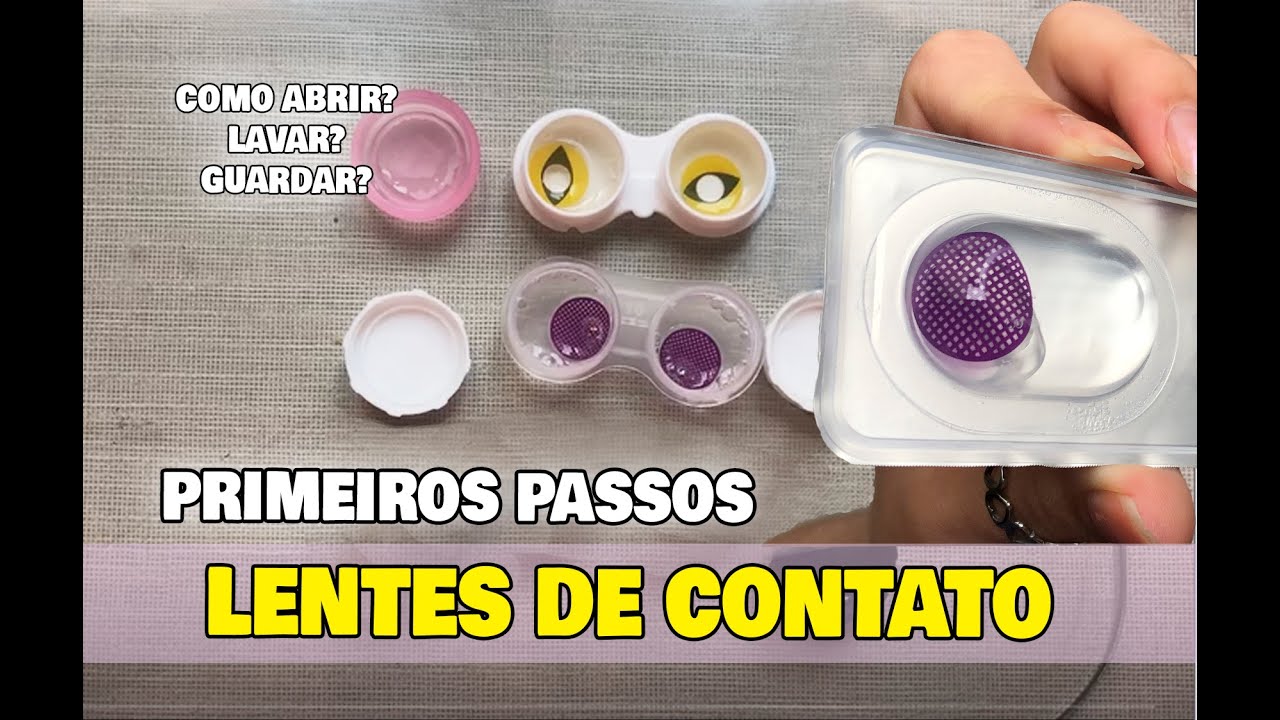
Before handling any lens, it is essential to gather the correct arsenal of products. The use of inappropriate materials (such as tap water or saline solution without preservatives for storage) can ruin the lens material and cause serious infections.
Mandatory Materials
- Colored contact lenses: Choose brands with health regulatory certification (such as ANVISA in Brazil or FDA internationally).
- Multipurpose contact lens cleaning solution: Essential for disinfecting, rinsing, and storing (recommended brands: Renu Fresh, Opti-Free, or Biotrue).
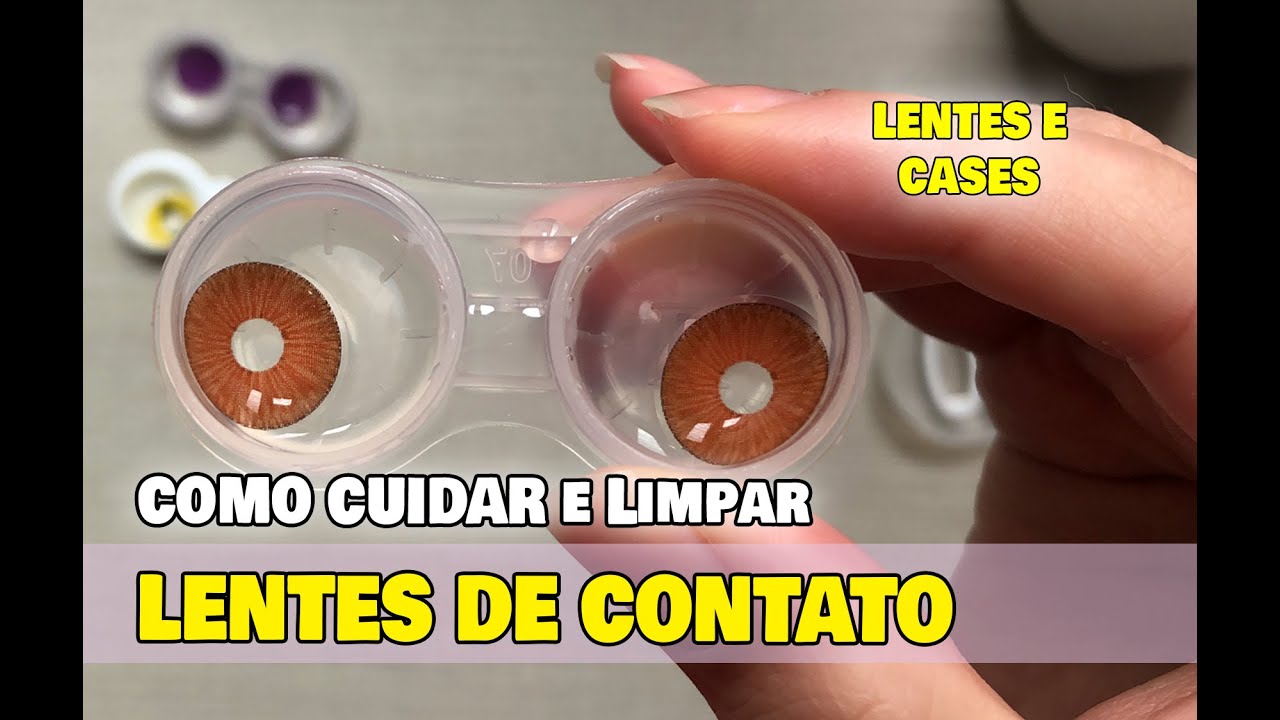
- Lens storage case: Must be replaced every 3 months to prevent the proliferation of bacterial biofilms.
- Lubricating/moisturizing eye drops: Specific for use with contact lenses (recommended brands: Renu Multiplus Drops, Systane Lids, or Lacrifilm).
Optional Materials (Facilitators)
- Silicone applicator (suction cup): Useful for those with long nails or a phobia of touching their own eye.
- Tweezers with soft silicone tips: Facilitates removing the lens from the case without the risk of tearing the material with fingernails.
- LED-lit magnifying mirror: Helps to visualize air bubbles and the exact positioning of the lens.
Safety and Essential Care
Contact lens safety must be the absolute priority of any cosplayer. The human eye is an extremely sensitive organ susceptible to infections by dangerous pathogens, such as the Pseudomonas aeruginosa bacteria or the Acanthamoeba amoeba (often found in tap water). Therefore, care for cosplay lenses begins long before the event and extends to post-use.
The golden rule of lens use is hydration and usage time limits. Colored cosplay lenses tend to be thicker due to the pigmentation layers, which reduces corneal oxygenation (hypoxia). The maximum recommended continuous usage time is 6 to 8 hours. Exceeding this period can cause corneal edema, extreme redness, and blurred vision. Never, under any circumstances, sleep while wearing your cosplay lenses.
Furthermore, pay attention to disposal. Lenses have post-opening expiration dates that must be strictly respected (daily, monthly, quarterly, or annual). Even if you have used an annual lens only once, it must be discarded exactly 12 months after the original seal is opened.
The Risk of 'Novelty Lenses' without Registration
It is crucial to avoid contact lenses sold as fashion accessories in department stores or non-specialized websites that do not have health regulatory registration (ANVISA/FDA). Lenses without technical certification often have flaws in corneal oxygenation and low-quality pigmentation that can come into direct contact with ocular tissue. Always check the approval seal and prefer brands recognized in the ophthalmological market to ensure the material is biocompatible.
Common Errors and Troubleshooting
- Inverted lens (inside out): Putting the lens in the wrong way causes immediate discomfort, a "sandy" feeling in the eyes, and constant displacement when blinking.
- How to fix: Before applying, perform the "bowl test." Place the lens on the tip of your finger and observe the edges. If they point up like a perfect bowl, it is correct. If the edges point outward like the rim of a deep plate, the lens is inverted. Remove, rinse with multipurpose solution, and flip it over.
- Inserting the lens after doing makeup: Applying eyeshadow, eyeliner, or mascara before putting in the lens is a critical error. Residues of powder and loose pigments will inevitably fall into the eyeball, getting stuck under the lens, which causes intense pain, tearing, and ruins all the makeup already done.
- How to fix: Establish the non-negotiable rule of putting in lenses before starting any step of makeup and removing them before starting the makeup removal process.
- Burning sensation or red eye when putting in the lens: This occurs when the lens has not been well rinsed of old storage solution or when invisible lint is stuck to it.
- How to fix: Remove the lens immediately. Never rub a red eye. Place the lens in the palm of your hand, apply a few drops of fresh solution, and massage gently with the tip of your index finger to remove residues. Use lubricating eye drops in the affected eye to soothe it before attempting to reinsert.
Step-by-Step
Follow these detailed instructions to ensure a perfect application and impeccable integration with your makeup.
1. Rigorous sanitization of hands and work area
Wash your hands very well with neutral antibacterial liquid soap (avoid moisturizing or highly scented soaps, as they leave greasy residues on the skin). Dry your hands with a disposable paper towel or a lint-free microfiber towel. Clean the table where you will place your materials to prevent floating dust from falling into open cases.
- Checkpoint: Your hands must be completely dry and free of lint or soap residues before touching any accessory or lens.
2. Inspection and preparation of the lens
Open the lens case corresponding to the right eye. Use the silicone-tipped tweezers or the tip of a clean index finger to remove the lens from the liquid. Place the lens on the palm of your left hand, add 3 to 5 drops of fresh multipurpose solution, and perform a gentle friction with the pad of your right index finger in circular motions for 10 seconds to eliminate protein deposits.
- Checkpoint: Hold the lens up to the light. It must be perfectly clean, without tears on the edges, without lint, and with the correct concave "bowl" shape.
3. Safe insertion into the eyeball
Balance the lens on the tip of your index finger of your dominant hand. With the middle finger of the same hand, pull your lower eyelid down. With the index or middle finger of your other hand, pull your upper eyelid up, exposing the eyeball well. Stare straight ahead into the mirror and gently place the lens onto your iris.
- Checkpoint: The lens should instantly adhere to the moist eye without you needing to press uncomfortably against the eyeball.

4. Centering and comfort test
Slowly look down, left, right, and up to help the lens settle over the cornea. Slowly release your eyelids and blink gently several times. If you feel any air bubbles or mild discomfort, close your eyes and gently massage the closed eyelid to expel the air.
- Checkpoint: The lens should be centered and you should be able to blink comfortably without feeling pain, scratching, or excessively blurry vision.
5. Anime-style makeup application
With the lenses already in place and comfortable, begin the skin and eye preparation process. Use highly pigmented eyeshadows and waterproof eyeliners to create the character's graphic contour. Apply white or beige eyeliner to the lower waterline to simulate the expanded sclera of the drawings and draw fake lower eyelashes right below to create the illusion of gigantic eyes.
- Checkpoint: All makeup must contour the lens without coming into direct contact with it. If any residue falls into the eye, apply a drop of lubricating eye drops to naturally wash it out of the eye.
6. Safe removal and post-use disinfection
At the end of the event or photoshoot, wash and dry your hands again. Look up, pull the lower eyelid down, and use the pads of your thumb and index finger to gently pinch the lens at the bottom, removing it from the eye. Place the lens in the palm of your hand, clean it with fresh solution, and store it in the case filled with new multi-purpose solution (never reuse the previous day's liquid).
- Checkpoint: The lenses must be completely submerged in the clean solution inside the closed case, ready for the next use with total safety.
Estimated Budget
| Item | Price range | Source |
| --- | --- | --- |
| Colored contact lenses (pair) | $16.00 - $50.00 | Estimated FX |
| Multipurpose contact lens solution (cleaning/storage) | $6.00 - $12.00 | Estimated FX |
| Contact lens case | $1.00 - $3.00 | Estimated FX |
| Lubricating eye drops (recommended) | $4.00 - $9.00 | Estimated FX |
Estimated conversion based on a reference FX rate; local retail prices may differ.