

Building a high-level cosplay requires a deep understanding of both the character's aesthetic and the engineering needed to make large-scale pieces functional. When approaching the Magik Marvel Rivals cosplay, we face a dual challenge: the iconic Soulsword Magik, which demands an imposing physical presence, and the armor set that defines her "Queen of Limbo" silhouette. This guide will focus on how to transform basic materials into professional display pieces, prioritizing structural stability and the creation of visual energy effects without resorting to complex lighting systems.
Character Visual: A Technical Analysis
Magik in Marvel Rivals features an aesthetic that blends modern tactical elements with the dark mysticism of Limbo. The silhouette is defined by asymmetrical pauldrons and the sword’s exaggerated proportions. The color scheme is dominated by dark metal tones, deep grays, and the vibrant contrast of energy emanating from her weapons and armor details.
To capture the character's essence, you must focus on the "language of materials." The armor should not look like cheap plastic; it needs to have the visual density of forged metal. The Soulsword Magik is the focal point; it is not just an accessory, it is an extension of the character. The texture should suggest something created outside the laws of physics, with edges that seem to vibrate with residual energy.

Priority Pieces for Visual Impact
If you have limited time, prioritize the elements that "sell" the character instantly. First, the Soulsword Magik is non-negotiable. A poorly built sword will ruin the cosplay, while a well-made one compensates for minor flaws in the armor. The large-scale prop structure must be balanced; if it is too heavy, you will lose the mobility needed for Magik's combat poses.
Second, the pauldrons and breastplate. These pieces define Magik's silhouette. They must be wide enough to create the "heroic" effect of broad shoulders, but not so large that they impede neck movement or sword handling. The proportion between the size of the sword and the size of the pauldrons is what creates the balanced look we see in the game.
Practical Adaptation for Cosplay
Translating digital design into the real world requires adjustments. What works in a 3D model is not always comfortable or durable at an 8-hour event. For cosplay weapon construction, use CPVC pipes or fiberglass as a central core. This ensures the sword does not bend under its own weight.
For cosplay energy effects, the key lies in color layering. Instead of lights, use the "dry brushing" technique with metallic paints and translucent neon colors over a matte base. This creates an optical glow that seems to shift according to the angle of the light, simulating the Limbo energy effect that Magik manipulates.
Estimated Budget
| Item | Price range | Source |
| --- | --- | --- |
| Placas de EVA de alta densidade (5mm e 10mm) | $16.00 - $30.00 | Estimated FX |
| Tubo de PVC ou fibra de vidro (núcleo) | $6.00 - $14.00 | Estimated FX |
| Cola de contato (latão grande) | $8.00 - $12.00 | Estimated FX |
| Tintas acrílicas, vernizes e pigmentos | $20.00 - $40.00 | Estimated FX |
Estimated conversion based on a reference FX rate; local retail prices may differ.
Common Mistakes and How to Avoid Them
- Flexible sword core: Many use only EVA foam without a rigid core. Solution: Insert a 20mm CPVC pipe in the center. If the sword is very long, use a 10mm fiberglass rod for greater rigidity.
- Inadequate EVA sealing: Skipping the sealing step causes the paint to be absorbed by the material, leaving the finish dull. Solution: Use 3 to 4 layers of sealant (such as diluted contact cement or acrylic sealant) before applying primer.
- Excess weight on pauldrons: Using too many layers of 10mm EVA makes the armor unbearable after 2 hours. Solution: Use 5mm EVA for the base and add details with 2mm, keeping the structure lightweight.
Step-by-Step: Constructing the Soulsword Magik
To create a weapon that is durable and visually impactful, follow this rigorous process:
-
Cutting and Structuring the Core: Cut your paper template and transfer it to the 10mm EVA foam. Cut a central channel in the EVA to accommodate the CPVC pipe. The pipe should run from the base of the handle to at least 3/4 of the blade's length to prevent bending.
- Checkpoint: The core must be perfectly aligned. If the pipe is crooked inside the EVA, the blade will look curved. Test the rigidity by shaking the piece slightly; it should not wobble.
-
Modeling Relief Details: Use 2mm or 3mm EVA to create the "energy" markings and the sword's runic details. Use an engraving tool (Dremel with a fine tip) to create deep grooves that mimic the energetic cracks seen in Marvel Rivals.
- Checkpoint: The edges of the glued pieces should be invisible. Use 120-grit sandpaper to smooth the joints. If you run your finger over it and feel a step, keep sanding.
-
Sealing and Texturizing: Apply a thin layer of heat sealant with a heat gun at 150°C. Then, apply 3 layers of acrylic sealant. This creates a non-porous surface.
- Checkpoint: The surface should look smooth, almost like rigid plastic. If there are open pores, the paint will have a sponge-like texture. Correct this with another layer of sealant.
-
Painting and Energy Effects: Start with a matte black base. Apply neon colors (electric blue or deep purple) into the slits made with the Dremel. Finish with a "dry brush" of metallic silver on the blade edges to create a weathered metal effect.
- Checkpoint: The glow effect should be evident under natural light. If the paint looks flat, apply another layer of "dry brush" with a lighter shade of silver on the corners.

Armor Construction: Shoulders and Breastplate
Large-scale prop structure, such as Magik's pauldrons, requires a reliable attachment system. Do not rely solely on elastic bands, as the weight of the foam can cause the piece to sag. Use magnetization systems with 20mm diameter neodymium magnets hidden under your clothing.
When assembling the armor, ensure the curvature of the pieces follows your body's anatomy. Use a heat gun (between 120°C and 140°C) to shape the EVA foam while it is still warm. Hold the piece in the curved position until it cools completely so that it "locks" into the desired shape.

Checkpoint: The pieces should be light enough to be worn over a thin t-shirt without causing discomfort. Test your arm movement; the pauldrons should not collide with your head or neck when raising your arms. If they do, trim the inner edge at a 45-degree angle.
Advanced Cosplay Painting Techniques
To level up your Magik Marvel Rivals cosplay, the paint job must tell a story. Magik is a warrior who fights in demonic dimensions. Her armor shouldn't look brand new; it needs to have signs of use.
Use the weathering technique. After painting the metallic base, apply a mixture of black acrylic paint diluted in water (wash) over the entire piece. Before it dries, wipe it off with a dry cloth. This will cause the black to accumulate in the crevices and details, enhancing the depth of your cosplay painting techniques.
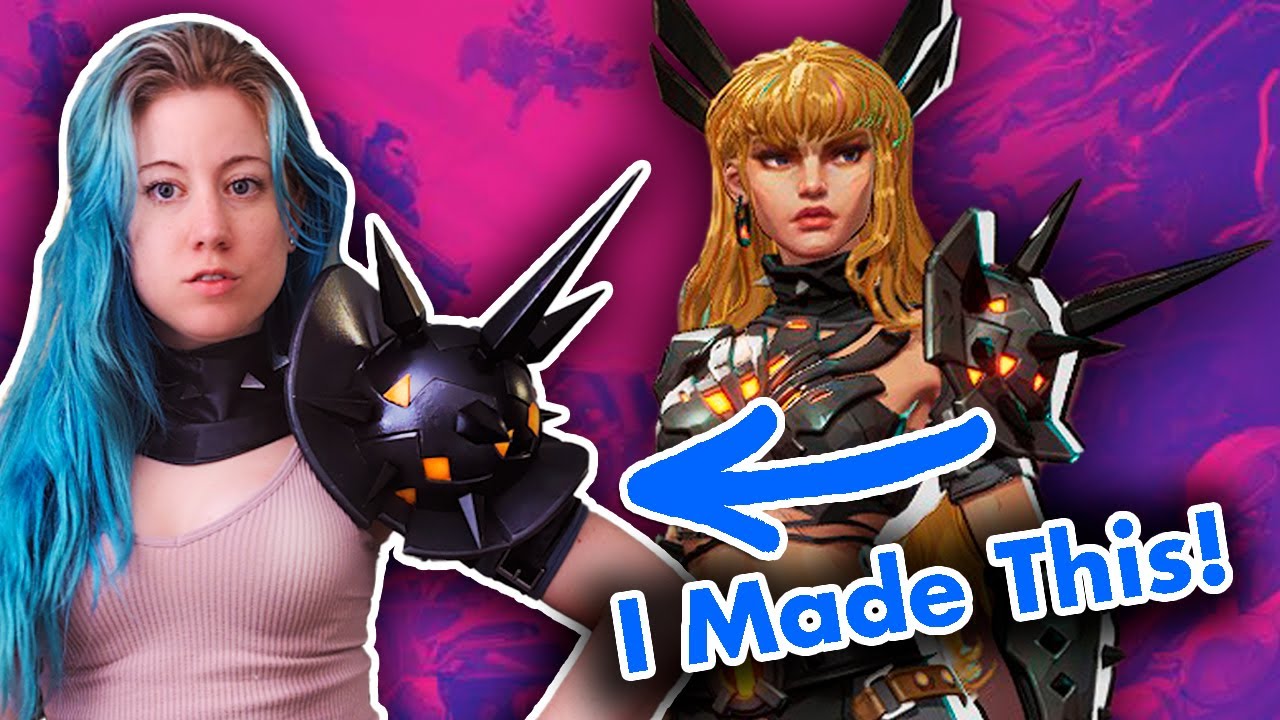
Checkpoint: Upon finishing, the paint should be dry to the touch but should not crack when flexing the EVA foam. If it cracks, it means the paint layer was too thick or the EVA was not sealed correctly. Use a matte varnish to protect the final work and prevent air humidity from affecting the finish.
Safety and Maintenance
Working with cutting tools and strong glues requires caution. Always use respirators when handling contact cements in closed areas, as the vapors are toxic. When using the heat gun, keep a distance of at least 15cm from the material to prevent the EVA from melting or releasing harmful gases.
To transport your cosplay accessories, create a rigid transport box. Since the pieces are large, they are prone to breaking in transit. Use bubble wrap and ensure the sword is locked in place inside the box. For emergency repairs, always carry a basic kit containing super glue (cyanoacrylate) and a brush with the armor's base color for quick touch-ups.
Tips for Mastering the Character
Magik is a character with attitude. Beyond the visuals, how you wield the Magik Soulsword defines the success of the cosplay. Practice combat poses that highlight the scale of the weapon. Remember: in Marvel Rivals, she is an agile duelist. Your poses should be dynamic, not static.
Observe gameplay videos to understand how she moves. Magik’s combat stance is low, with her center of gravity close to the ground. When taking photos, try to replicate this stance; it will make the armor look much more integrated into your body and less like an accessory "glued" onto your clothes.
Project Conclusion
Building a professional-level cosplay for Magik is a marathon, not a sprint. Dedicate time to planning and structure. Each hour spent sanding an edge or perfecting a layer of paint is a step toward a result that not only impresses but also stands the test of time and events.
By following these guidelines for cosplay weapon construction and focusing on the quality of materials — such as using high-density EVA foam and well-executed painting techniques — you will be ready to bring the Queen of Limbo into the real world with all the presence she deserves. Remember to always check the fit of your pieces before final gluing, as adjustments made after final assembly are much more difficult to execute. Now, with the technical foundation established, it is time to start cutting your foam and bringing your own version of Magik to life. The success of your project depends on the precision with which you execute each step detailed in this guide, ensuring that durability and visuals go hand in hand in every detail.